

Horror wrap
Obsession, Backrooms, Celia, Hokum, Cabin in the Woods, Vivarium, Titane, Sirāt
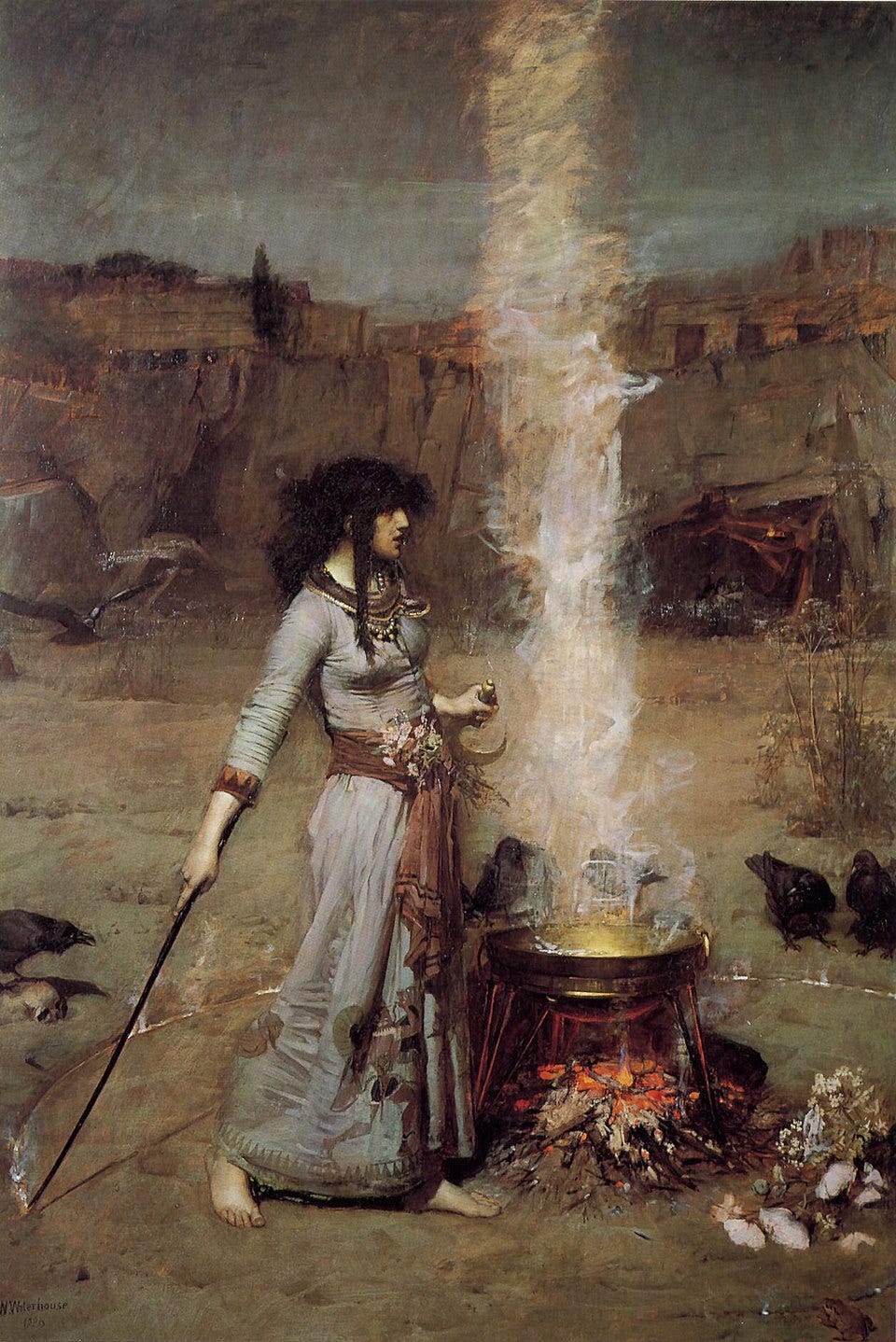
In this Waterhouse painting, The Magic Circle (1886), a woman stands alone, barefoot and unprotected but for a line she draws in the earth around her with a wand.
Beyond the boundary, haunting figures wait: toads in the grass, circling crows, a human skull, a watchful figure in a cave. The woman is unafraid. With one hand she draws the line and in the other she holds a crescent boline, a tool for cutting herbs which you see in her belt. She has chosen to be here, exposed, and everything enclosed within the circle is by her design. Even the smoke from her fire rises in a compliant line.
The circle lies open to us, the audience, but her demeanour of control asks would we be safer in the circle with her, or out among the crows and toads?
The barrier she has drawn protects her from the outside world but in doing so, she barracades herself inside. In the same way, we fabricate barriers for our own protection from emotional pain, only to find later in life we trapped ourself with a monster.
This painting came to mind when remembering these films, several themed around unresolved trauma. The psychological withdrawal as self-protection in Backrooms, the safety of the chalk circle from the horror outside in Hokum. All these things are the same. We all draw our circles, inside or outside there are dangers.
Obsession
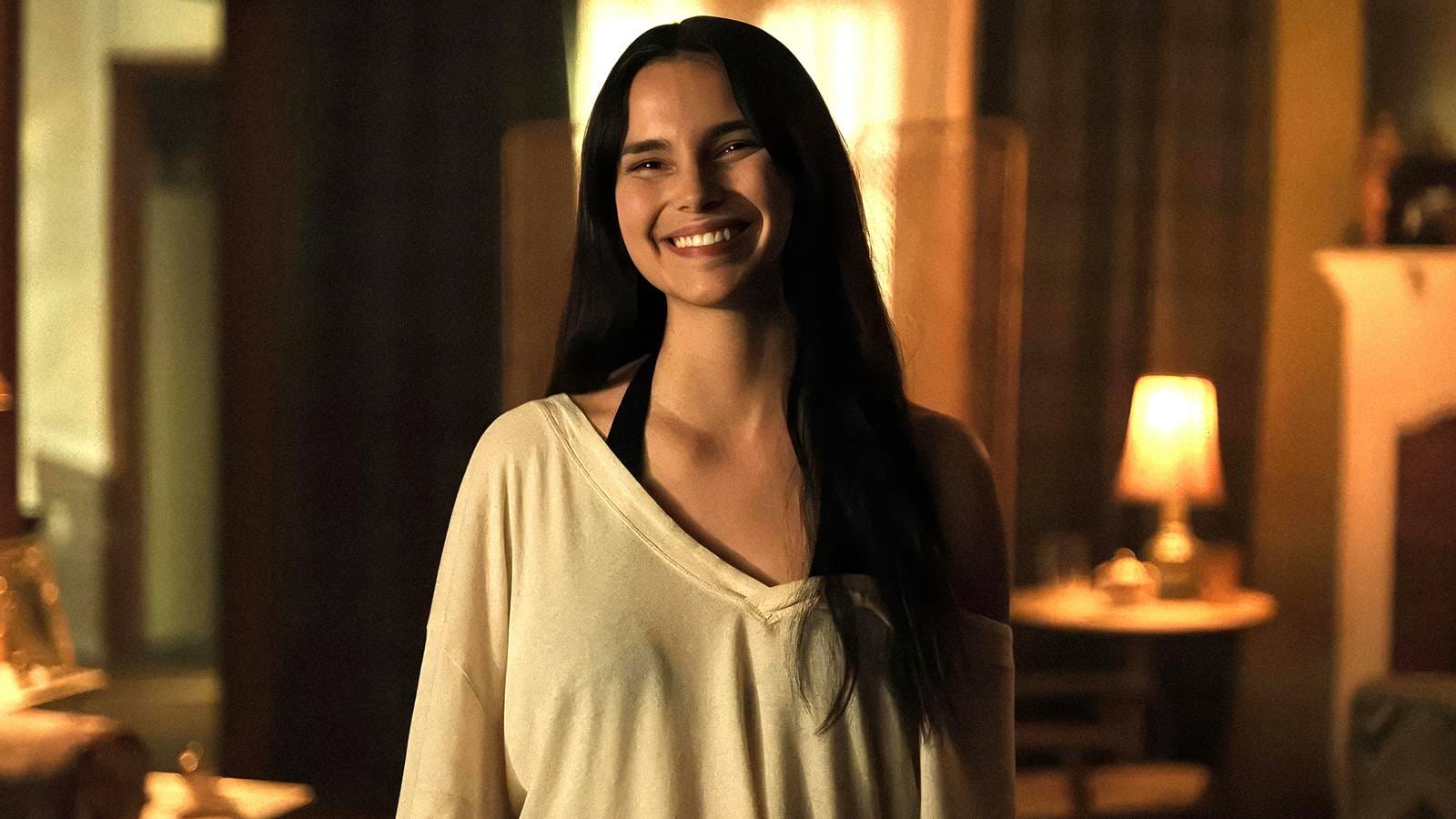
Regular ‘nice guy’, Bear, is down bad for the cool chick at work but too ineffectual to tell her. He’s worried confessing his romantic feelings for her would mean the end of their friendship, and it probably would. A classic situation and the answer is always – do you like her enough to ruin the friendship for the chance of something more, and if not then sit tight and it will probably pass. Anyway, instead he wishes on a novelty toy for this woman, Nikki, to ‘love him more than anything in the world’, and it comes true.
Nikki, the object of Bear’s affection, becomes objectified in the purest, fullest extent of the word – to become an object. Bear’s wish renders her immobilised, essentially ‘locked-in’ as her body and behaviour is controlled by the wish. A totally abhorrent concept taking the violation of consent to its completion.
There’s something so specifically ick about this type of man who feels he is owed recognition and praise for his restraint from cruelty. The type of man that feels entitled to a place in the social hierarchy and thinks he has been unfairly overlooked because of his shyness and impotence. This is the type of man that can justify his own selfishness because he thinks he is balancing some cosmic scale of fairness. When he is confronted with the true nature of his dehumanisation of Nikki, he responds with contempt, because her rejection of him – in his eyes – is a violation of his entitlement to her. He thinks he is the one being denied what he is owed. In those moments the truth of his desire is revealed: he doesn’t love Nikki, he doesn’t care for her at all. He is in fact completely indifferent to her quality of life and willing to dehumanise her in every regard to manifest his own fantasy.
Makes you wonder how many men desire the same fantasy. The total objectification of woman-as-object is already rife in porn and society. The proliferation of the ‘free-use’ fantasy, the growing sex doll industry fast becoming integrated with AI to make more realistic the experience of control, the power motivations of deepfakes. Even the resurgence of the trad wife, the wife as a possession, the wife as a means of domestic labour. Women were only allowed to get a mortgage without a man in 1971, a year after the invention of the suitcase with wheels.
Also had the displeasure of seeing this film at the worst cinema in Melbourne, FOMO Cinema in Brunswick. Aside from being fundamentally against cinemas that offer in-film dining (why would you ruin a movie and a burger at the same time), it also has the shittest fit-out, with glass tables that reflect the screen and rooms that are too bright and chairs that are too narrow. Hate!
Really good, fucking disgusting film.
Celia
A child is often the object of a horror film as a representation of innocence and naivety. These qualities make the perfect ground to be subverted by malevolence. The helplessness of the object-child heightens the cruelty inflicted on it.
Despite us all having been one, on screen the interior world of a child is often impenetrable or filtered through adult logic; they’re not real characters. They are a representational persona instead of a subject, a conduit for evil engineered by a third party from a distinctly adult place: a possessing spirit, an intangible evil, a violent disease etc. There’s always some unsettling kid standing in a hallway doing something weird with their body and you’re like what the hell, evil little freak.
Even The Shining, one of the best horror films of all time, works this way. While compelling, Danny is still a conduit for a psychic power that connects him to the malignant Overlook Hotel. His agency and decision-making is propelled forward by the messaging of the ‘shining’, an intangible force beyond his control and understanding.
So many horror films depend on this dynamic to generate fear and to position the narrative so the audience can experience the ultimate resolution: the saving of a child.
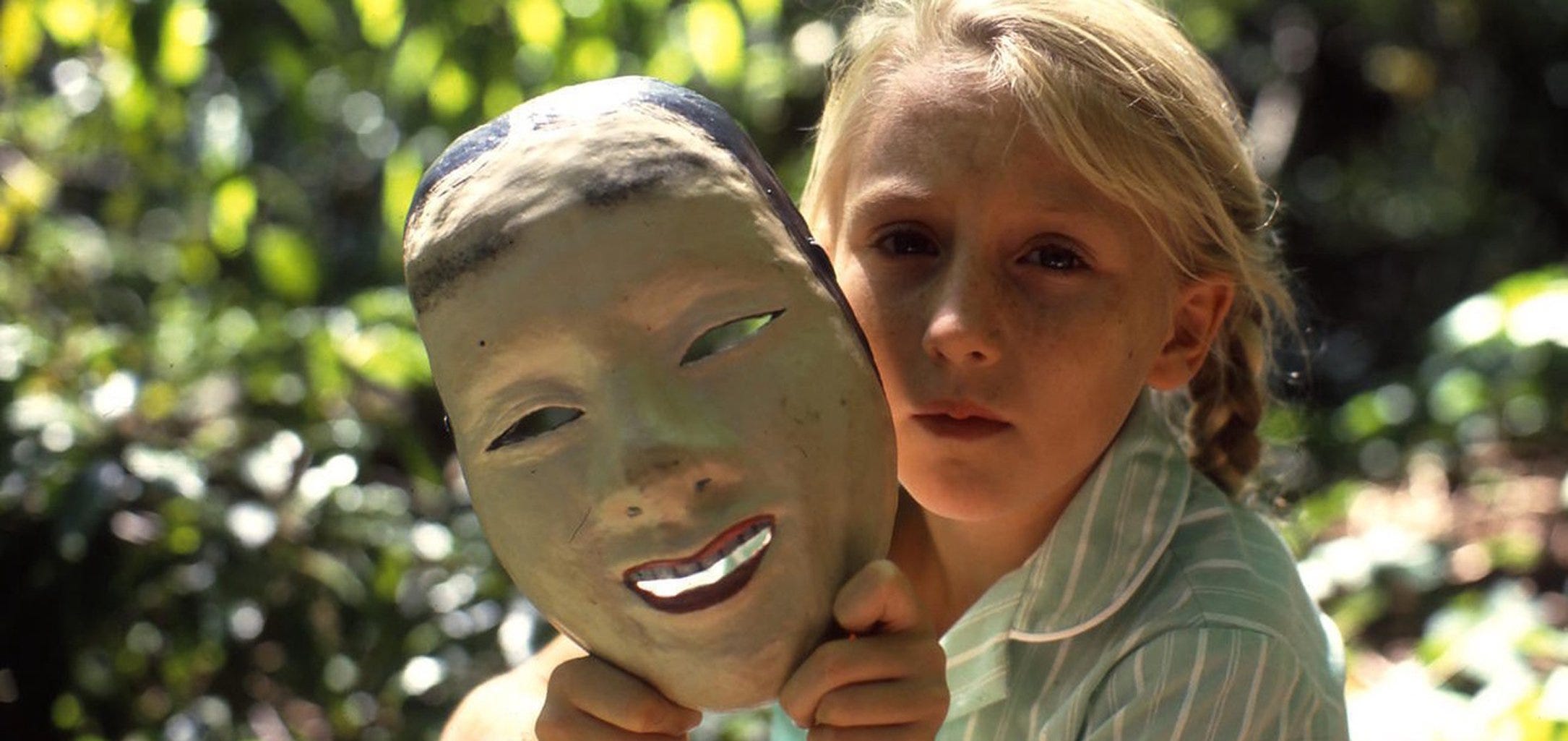
Celia, written and directed by Ann Turner, inverts this trope. Set in late 1950s suburban Melbourne, the film is shown through the eyes of Celia as she makes friends with her new neighbours, the Tanners, and grows close to their mother. The bond becomes complicated as we learn the Tanners are communists.
Unlike most films where the interior world of the child is opaque, Celia’s imaginative perspective is explored with grace and nuance. We recall the strangeness of experiencing the world as a child, the fragmented understanding of adult issues and politics, the social confusion and hierarchy, the sentimentality and fear.
It’s a quintessentially pre mobile-phone childhood. Kids are running loose for hours into the night, eavesdropping in the bush, climbing trees and fist fighting each other in quarries.
The evil of this film is relatable in its humanity. It captures the kind of childlike cruelty that comes from untethered emotion and misunderstanding, distinct from the stylised evil so routinely projected onto children in horror films. It feels messy and real.
One particular montage – Celia driving a long needle into the head of an effigy while chanting ‘death’ at a bonfire – is followed by her father finding out and whipping her with a belt. He is pulled from the room by her mother and we stay with Celia as she bares down alone on her bed, tears in her eyes, her parents’ yelling audible through the door. It’s a harrowing piece of realism that captures the fear and loneliness of being a child.
A through line of rabbits runs parallel to the film’s politics, the rabbits a stand-in for the fear of the spread of communism post-war, its infiltration to our enemy ‘next door’, and Celia’s desire for her own pet rabbit, a representation of the emotional safety she seeks in her relationship with the Tanners.
Altogether a brilliant Australian film. The heartbreak of this child is difficult to watch, it has been on my mind for a long time.
This is a secret forever and ever
Swear on my living heart
Blood will never part
Backrooms
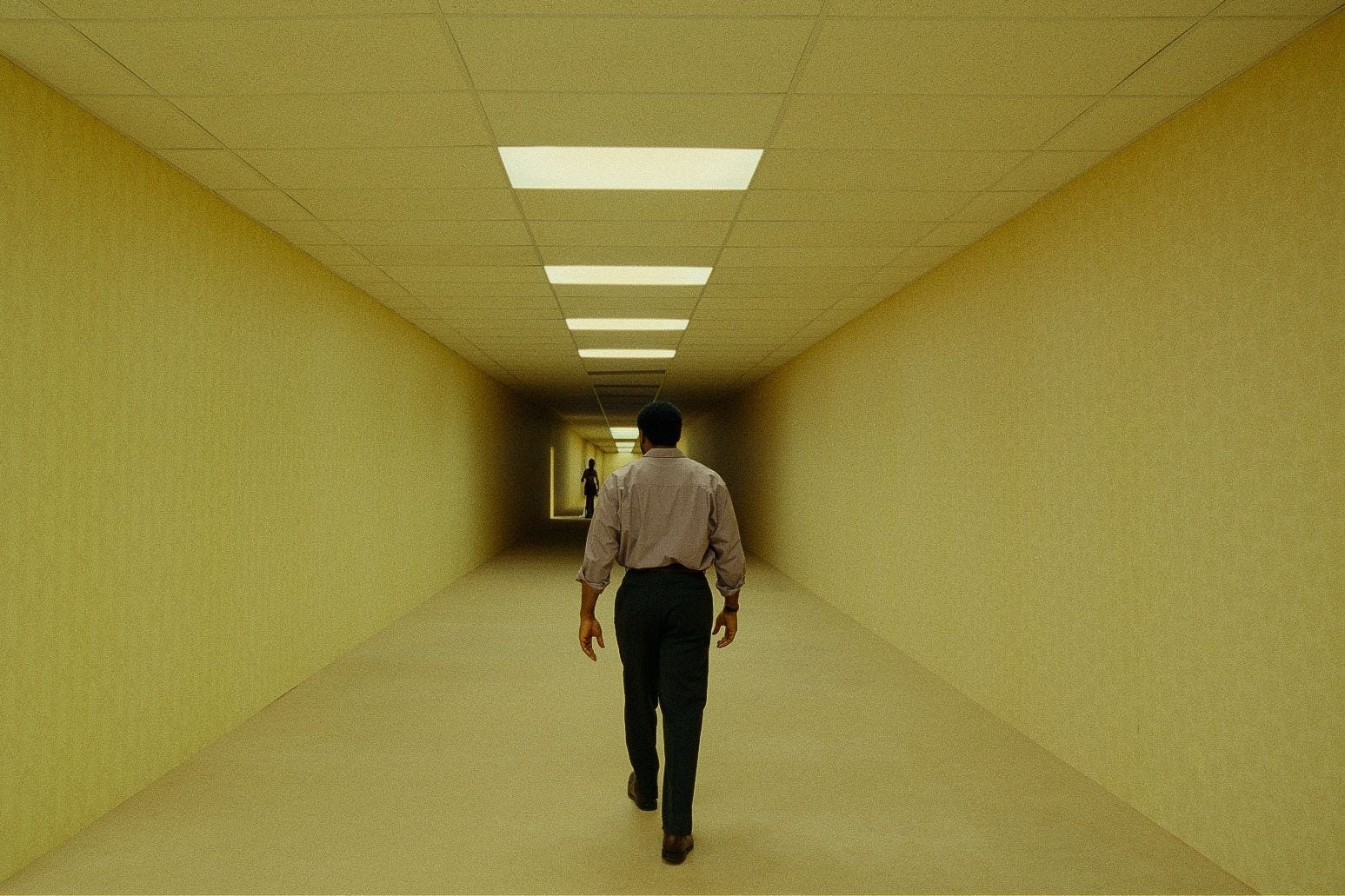
A flailing furniture salesman discovers a gateway to the ‘backrooms’ underneath his store. This deeply Jungian film explores the concept of the subconscious as a physical, collective space where the darkest parts of the shadow-self manifest as physical forms. Seeing this film at this time in my life felt pointed, like my psychoanalyst personally engineered it to antagonise me.
In this expansive liminal space, the protagonist finds himself comfortable. Here, he can escape the accountability of confronting his internal dysfunctions which would be required to succeed in the real world. The film essentially conveys the warnings of failed individuation: if you cannot find harmony with the darkest parts of your unconscious, they will ‘eat’ your ego. Your darkest thoughts will consume you. Not sure the dinner table scene was necessary to make this point though.
There is a parallel theme of the decaying nature of memory and trauma, and its residual, changing, and deteriorating effects. A friend’s analysis of this component focused more on the changing architecture of contemporary public spaces – the homogenisation of rooms and buildings, the replicas of style we see in an economically conservative society, until all buildings look the same, with increasingly diminished features and individuality. This makes sense, considering we find out in his sessions with his therapist the protagonist was a failed architect. I think both interpretations are true.
It’s interesting that liminal spaces still manage to capture the imagination despite being essentially a corporate aesthetic. There is something abject about the corporate space. Its purpose is tucked away inside computers and in the opaque responsibilities of workers. It only makes sense when being used, similar to a department store, and after closing hours both these spaces cross some threshold into the uncanny. Being inside these spaces outside of their functional times feels unnatural – you are somewhere you’re not supposed to be, seeing a place in a context you’re not supposed to see.
The Liminal Space subreddit has an impressibly thorough and considered definition of what qualifies as a liminal space. I love its intolerance for what types of images it will allow to be submitted – specifically articulating they must meet multiple criteria from an extensive definition. Worth a read: r/LiminalSpace
Anyway, Backrooms is the debut film by YouTuber Kane Parsons (Kane Pixels). The pathway reminds me of Skinamarink (2022) by Kyle Edward Ball, crowdfunded and produced for only $15,000, also following a proof-of-concept short did numbers on YouTube, and also capturing the dread of a liminal space. However, significantly smaller in scale without the support of A24, Skinamarink stayed mainly on the festival circuit before landing a limited theatrical release, and honestly, I can understand why – it was boring as hell and didn’t have a lot under the hood. Compare that to Backrooms, which has done a pretty good job of layering a concept over an aesthetic that could otherwise have been threadbare. A few scenes in particular are brilliant. Anything set in the dream world of the psychologist and the memories of her mother, and the production design of the furniture store, placed in a fading ‘70s television advertisement, is very compelling. The two side characters seem a bit misplaced in their fashion, too contemporary – though maybe we’ve so wholly circled back into the style I can’t tell the difference.
Great original score by Kane Parsons and Edo Van Breemen, particularly love the track Furniture Lament.
Vivarium
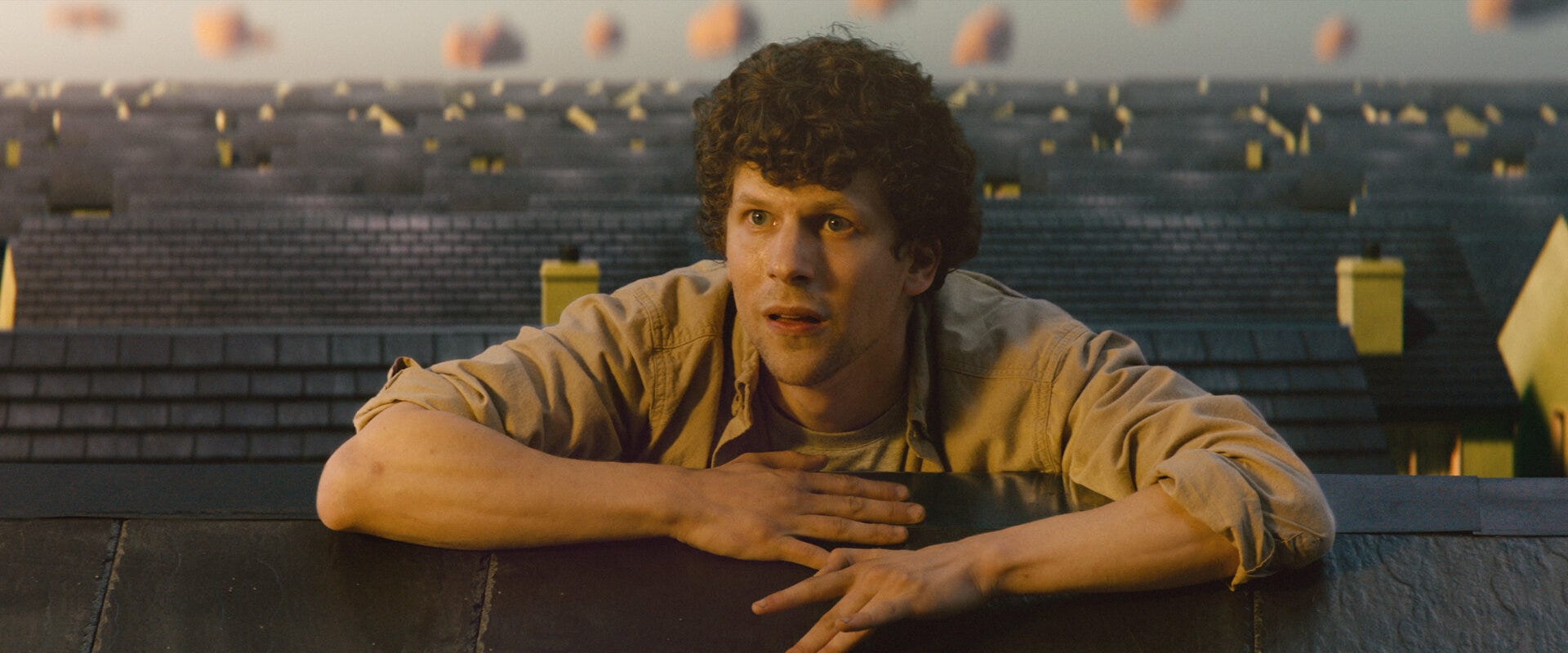
Young couple Gemma (Imogen Poots) and Tom (Jesse Eisenberg) visit a display home in a new development called ‘Yonder’, accompanied by a strange real estate agent who abruptly abandons them. They get in their car to leave but find no matter which direction they drive, they arrive back at the same house.
In Yonder, identical millennial-green houses line identical streets, with identical pristine lawns and charcoal tiled roofs. Even the clouds hang uniform in the sky in repetitive childlike shapes. Many homes have the pretence of being ideal, these homes really are ideal.
On the wall in the living room is a framed painting of the house, and in the master bedroom is a framed painting of the master bedroom. Even in the imagination of this world the utopia is the house itself and the mission it represents.
There is a blueprint for the future in the design of these houses. The second bedroom is a nursery for a child. In the fridge is a bottle of champagne in a gift basket with strawberries. It is something to be celebrated, this initiation. A few days into their containment in this pre-fabricated suburbia, after their attempts at escape have been futile, the couple find themselves responsible for an uncanny baby that appears at their door in a box.
The film continues in the same bleak manner through a horrendously pessimistic and relentless portrayal of parenthood. Not sure what to take away from it other than wanting to be single forever and wondering if the writer needs a welfare check.
The pessimism is forgivable but the whole thing was boring. Perhaps the point was beyond me; I’ve never experienced the ceaseless monotony of raising a child. Peter Bradshow of The Guardian stated: ‘Vivarium is a lab-rat experiment of a film, with flat, facetious humour and a single insidious joke maintained and developed with monomaniacal intensity. In its way, this film is an emblem of postnatal depression and simple loneliness.’
This did make me reconsider my assessment. Perhaps the ‘single insidious joke’ maintained in this fastidious way is a validating portrayal of the despair in raising a child if you are depressed and feel suffocated by domesticity. Perhaps there’s something in this film that means something to someone else.
Cabin in the Woods
Big fan of horror films about horror films. Gorgeous opening sequence and title treatment, something very Austin Powers about the way they drive those little cars indoors around a sterile facility.
Unsurprisingly co-written by Joss Wheddon, his little Buffy-style fingerprints are all over the weird, anti-establishment, weed-smoking character who starts out as a freak and becomes a jock by the end (Whedon’s obvious stand in).
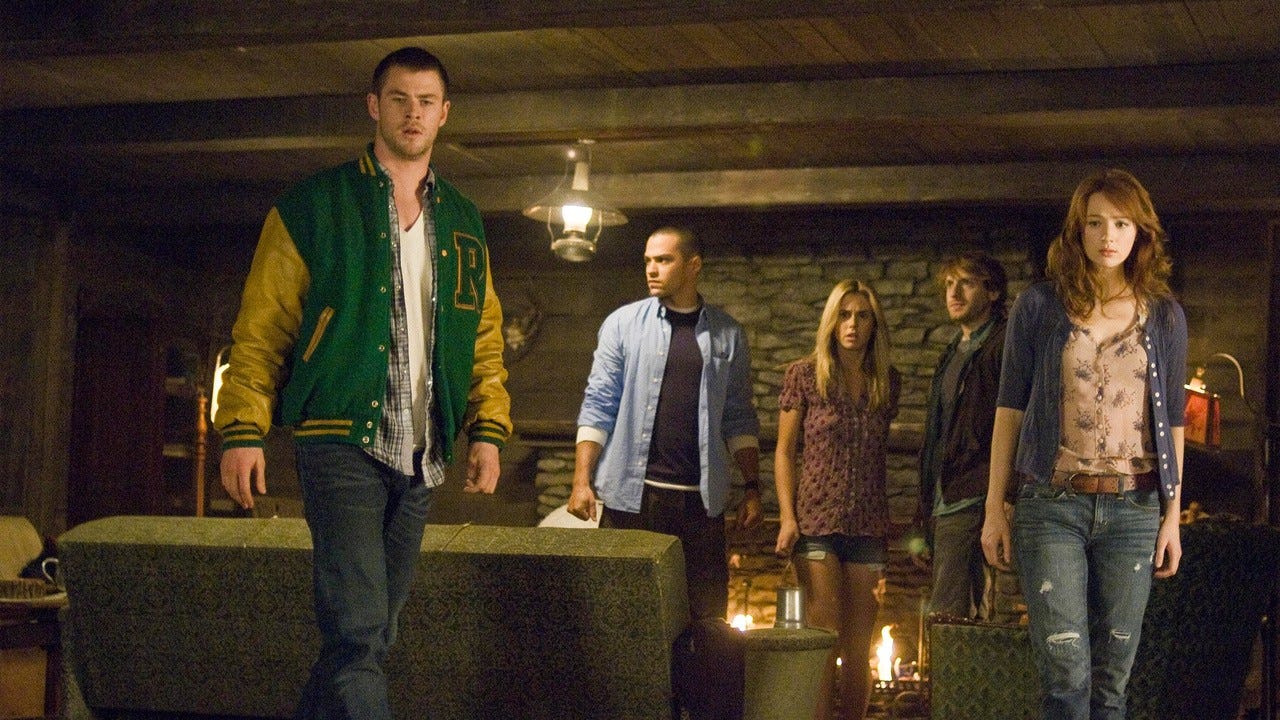
The film is pretty unsubtle in its showcasing of horror conventions but it’s fun because we’re all in on it together. The scenes in the control room are far stronger than the primary set-up unfolding elsewhere, which is comparatively boring and not remotely scary. There are highlights though – not least the novelty of watching a pre-Thor Chris Hemsworth do an American accent. It’s a jolt to the system to hear something come out of his mouth other than that weird British thing he’s been rocking for the past decade.
Structurally, the film is most interesting when it implicates the audience in the set-up. We are the ones asking for blood, and we get what we want in a fully banger finish. Very clever but the execution is either too daggy or not enough.
Hokum
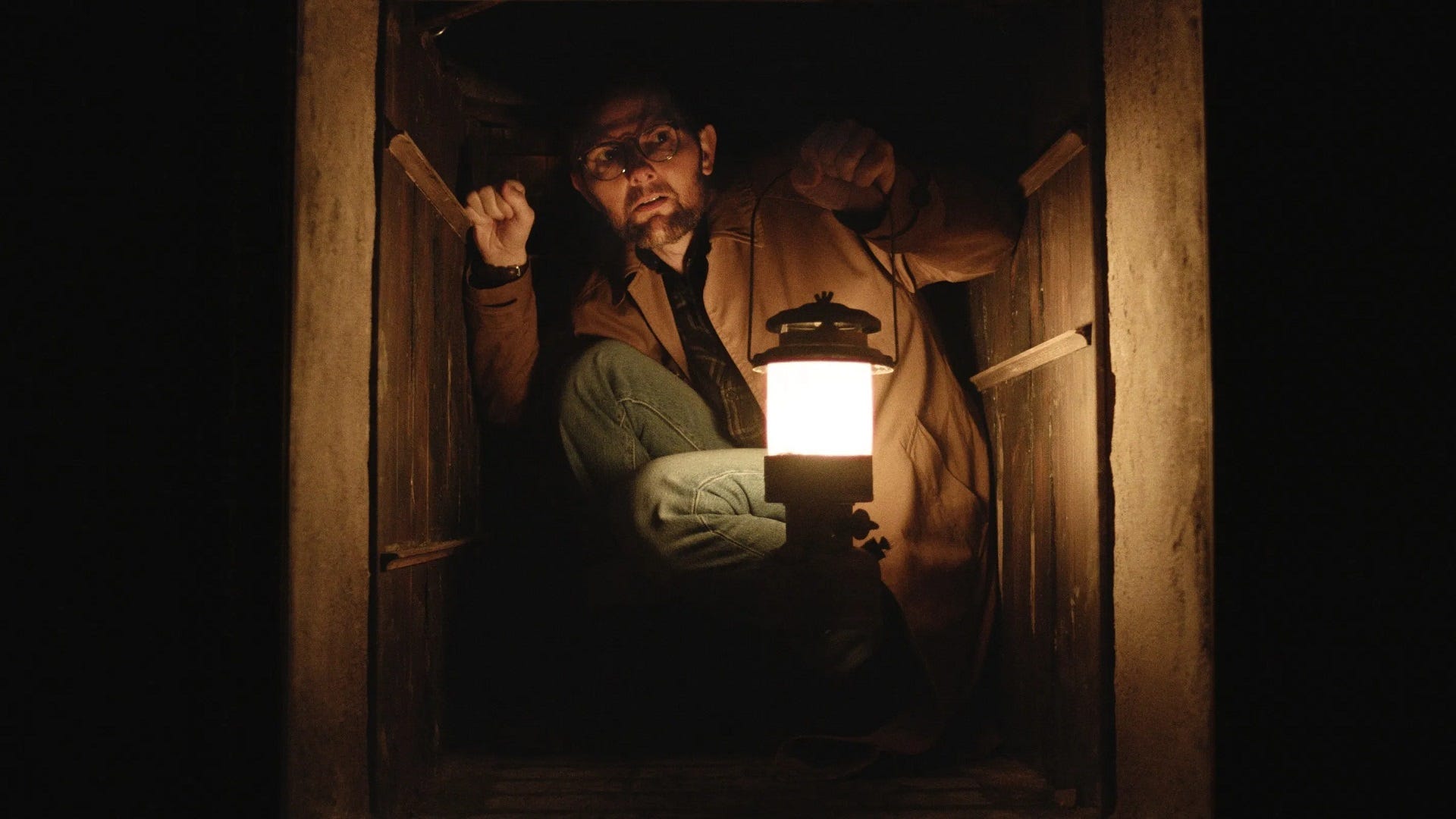
Sardonic American writer, Ohm (Adam Scott), visits an inn in a misty forest in rural Ireland to scatter his parents ashes at the place they once honeymooned. He’s not a sympathetic griever. He’s abrasive, wry and weary in his assessment of his surroundings that are rich with Irish folklore and haunting stories from the past. Adam Scott is so fantastic in this role, one of the best performances in a horror flick I can think of.
Ohm’s condescending interactions with a cast of complex and quirky characters at the inn progressively sets off an unravelling of events. There’s a sense of a spiralling; deeper into the world of folklore, deeper into the past, and deeper into the hotel, which comes to represent a catalogue of unresolved traumas and regrets that have festered in the metaphorical and physical basement.
There is so much thematically rich detail woven into this film. Many references to The Shining and other classics, a huge amount of emotional depth and symbolism, a psychedelic treatment of the supernatural and the misery of familial regret.
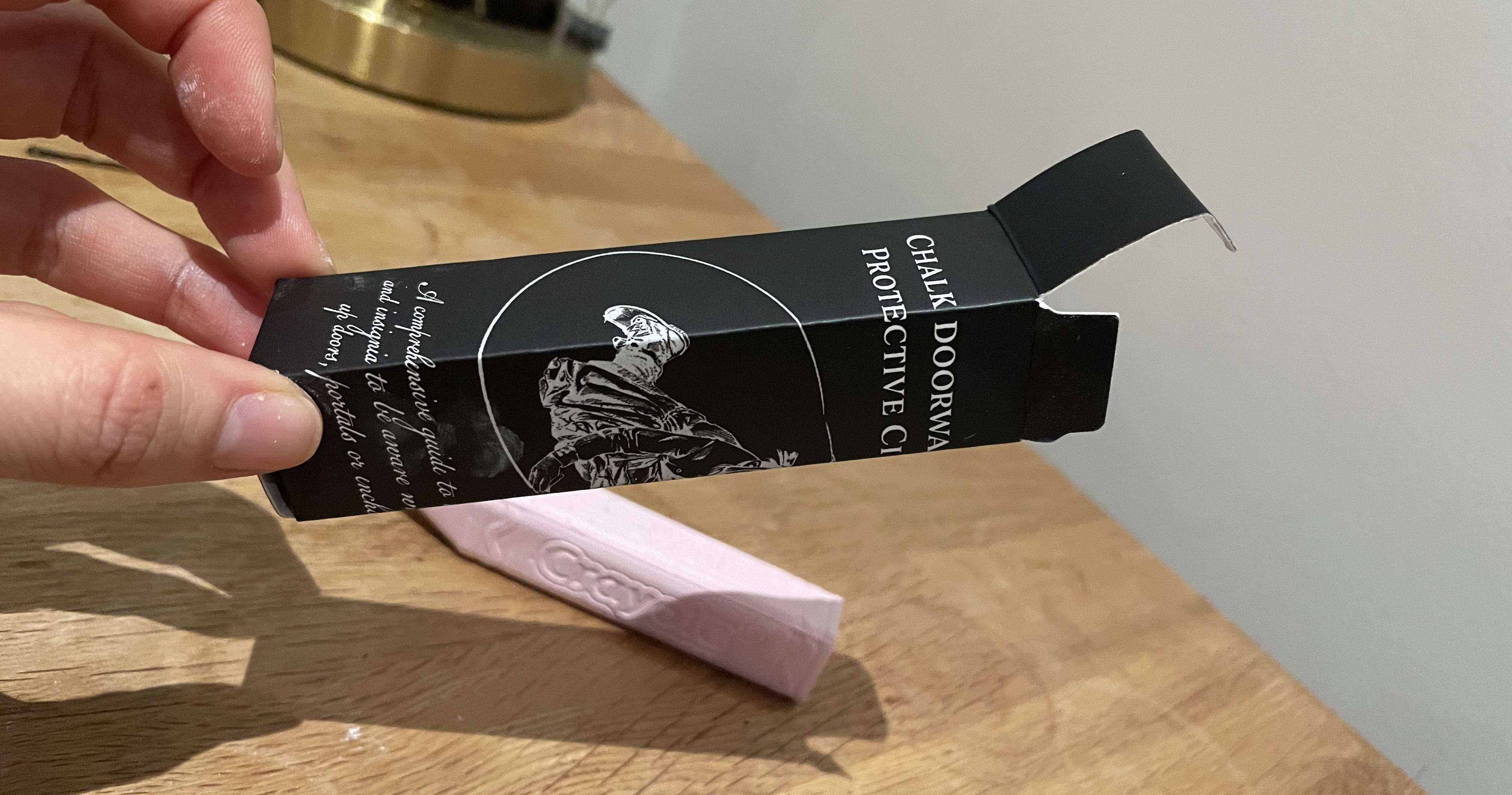
I saw this at the opening of Fantastic Film Festival at LIDO and they gave us little branded sticks of chalk which was a novelty despite my having absolutely no use for them.
Extremely good!
Sirāt
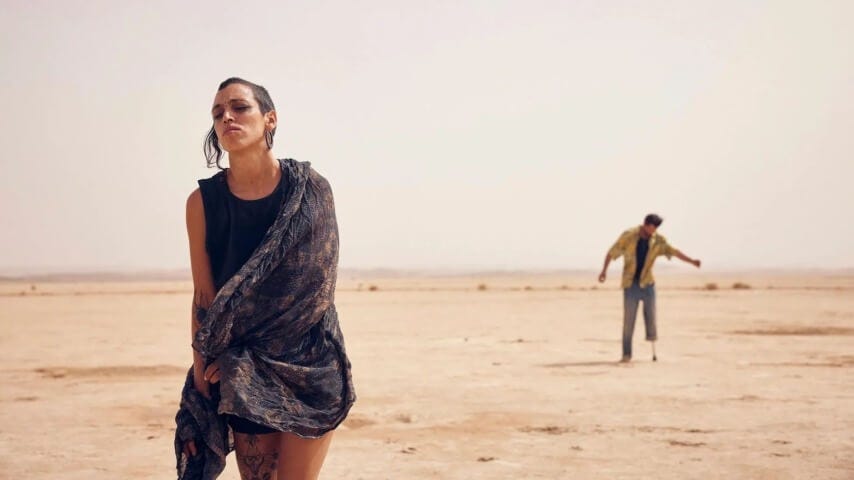
A father travels to a rave in the remote desert of Morocco with his young son looking for his missing daughter. He meets a small band of rave lifers, weathered and asymmetrical in varying styles, who follow rumours of a mythical rave somewhere in the landscape. Due to the looming threat of some unspecific global conflict, the group are pressed further and further into the desert where their survival becomes precarious as supplies dwindle.
I’ve never considered bush doofs and traversing a desert as bed fellows but this parallel portrayal is visceral. It captures the sensory experience of dust coating every orifice of your face, and of trying to clean your eyes with dirty hands and brittle fingernails black at the tips, and of waking up at an unknown time dehydrated and disoriented and gasping for air. The music is a saturating element, but kind of unmoving and relentless like many of the other components.
A few heavy shock moments are drowned out by 114 minutes of everything else being stressful and happenstance. Not much feels related to much else, all is just a texture of stress and noise. Among it all, they find new and creative ways to connect their speaker system to power and dance around, separately, pursuing their own internal spiritual discoveries. Not at all evoking the coming together, communality and interpersonal connection that can make dancing so transcendent. I found it suffocating and harsh. Honestly the whole thing made me vaguely anxious and affirmed a few of my life choices to party less and get into coconut water.
I will say I saw this in Spain, in Spanish and without subtitles so… idk. Perhaps knowing what anyone was talking about would have changed my mind, but much like at a real rave, I don’t think it mattered much what anyone was saying.
Titane
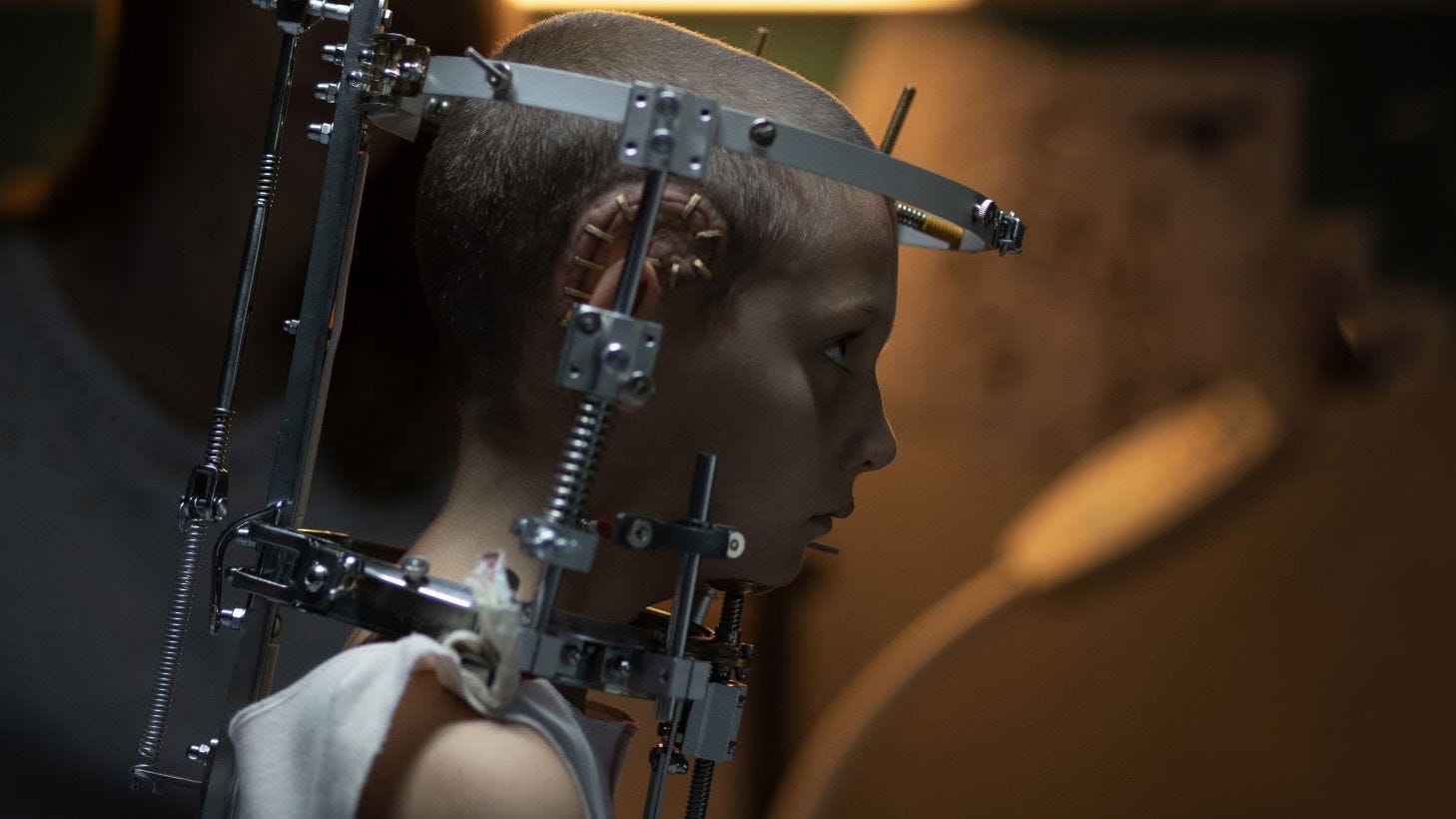
A child with a perverse undercurrent annoys her father to the degree that he crashes the car, and she has to have a titanium plate inserted into her skull. When she comes out of hospital, she traces the frame of the car with her fingers and embraces it, pressing her cheek to the glass.
For the first 20 minutes of this film I was accidentally playing Stinger J. at the same time and thought it was part of the score. I was actually getting around the constant soul music as an artistic choice before I realised it was my own Spotify. Just noting this because it potentially affected my interpretation of the tone.
Flash forward, Alexia (Agathe Rousselle) is an erotic dancer at a car show performing on a yellow Cadillac with a flame wrap. At some point she has sex with the car, consensually or not it’s unclear, and later develops stomach pains as engine oil leaks out of her.
The betrayal of your own body is a particular torment. The strangeness of something alien to you, outside of your control, scratching at you like a thorn. The fear of a foreign element inducing your body to behave in a way you can’t predict is specifically terrifying.
This film is so French in that unapologetic, provocative way, where sexuality is hostile and familial boundaries are blurred. There are some interesting themes explored around gender and sexual assault, though it feels like a bit of an empty challenge at times, a bit of conceptual shirtfronting.
Her homicidal coping mechanisms see her on the run, and she self-inflicts a violent transformation; from the destruction of one self, she emerges as another, not unlike the transformation of childbirth we see later. Despite its coldness and aggression, there are a couple of moments of genuine warmth, like when she dances with her fake father in the fire station, and we remember that we only have to ‘let the soft animal of your body love what it loves’, as Mary Oliver wrote in ‘Wild Geese’.